Our foundation in Uganda’s farms and cooperatives.
Illustration. A proposed model, not an AVERON facility or completed project.
The opportunity
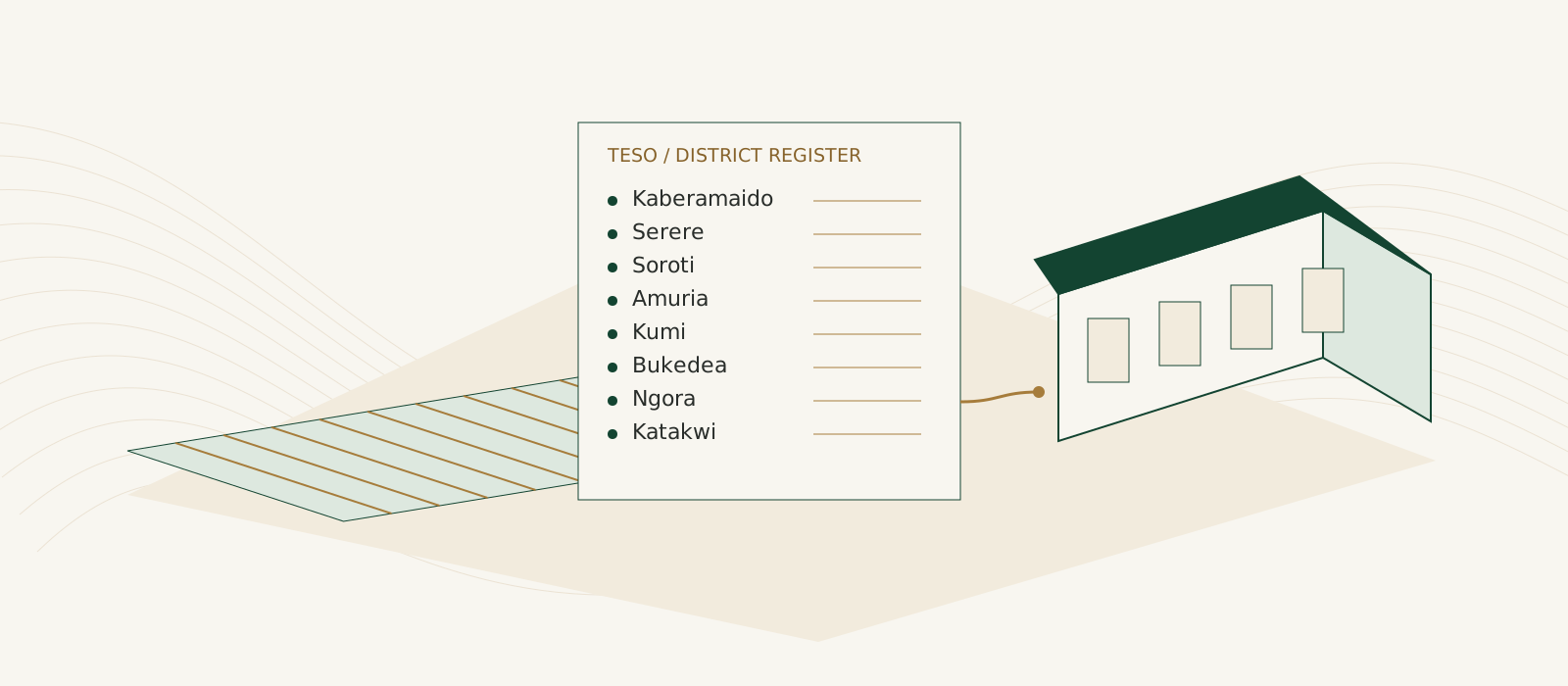
Through DMI Ltd, our starting point is a network of 21,832 member farmers in 39 cooperatives. The Grain Hub and Integrated Programme are in development. Each planned sector begins with a need in that agricultural business.65,66
Where the work standsThe cooperative network is the foundation. Processing capacity, construction, platform pilots and programme expansion remain in development or proposed; project targets are not operating results.
East Africa now
Crop supply is the first industrial constraint
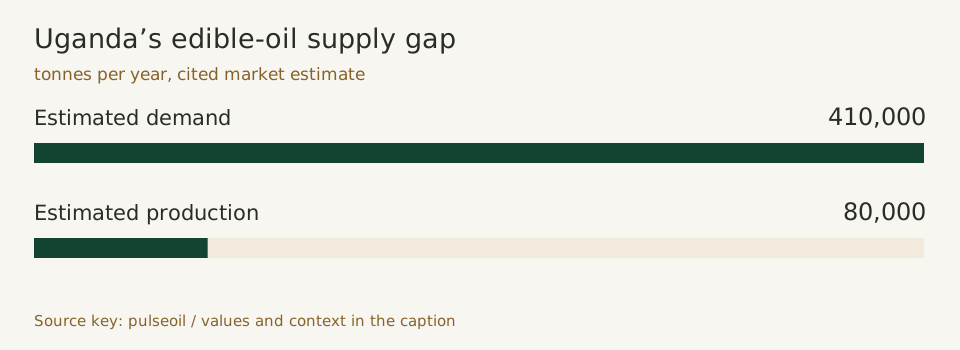
NAADS reports a large edible-oil import bill and processors short of local raw material. The cited market estimate places annual demand at 410,000 tonnes against production of 80,000 tonnes. Growing reliable supply matters alongside building processing capacity.14,15
Demand crosses borders
Kenya’s maize shortfall has drawn supply from Uganda, with consequences for local prices. AVERON plans to consider domestic, regional and export buyers together, matching contracts to available supply and food-quality requirements.26,76
Export records are part of production
Coffee earnings reports show the importance of the export market. Uganda’s ministry is undertaking coffee and cocoa farm mapping for EU deforestation requirements. Traceability connects the plot, the farmer and the delivery; it is a reason to design records alongside crop services.10,11,72
Agriculture underpins the wider plan
Bank of Uganda’s growth discussion places agriculture among the sectors expected to move further into processing and export. Our proposed response joins input supply, collection, quality control, processing and payment instead of treating each as a separate project.9,76
Demand and production estimates from the cited 2024 report. They are market context, not AVERON capacity or a forecast of sales.15A farmer harvests maize in Central Region, Uganda. Illustrative photo. Photo: Mwesigwa Joel, Pexels licence, via Pexels. Resized for the web.
What AVERON will do
Stages describe the proposed sequence. Progress depends on the decision gate for each stage; no commissioning date is promised.
NowNetwork established / projects in development
Prepare around the cooperative base
Work from DMI’s cooperative register, develop the Grain Hub and advance the draft Integrated Programme feasibility study.65,66
Decision gateConfirm project requirements, stakeholder support and the evidence needed for financing.
NextProposed / finance dependent
Develop the hub and pilot services
Progress Grain Hub construction only after approvals and finance; prepare the FarmGate pilot around farmer, input, delivery and payment records.
Decision gateFinance and approvals, a tested pilot plan and a delivery team.
LaterProposed / feasibility stage
Consider the Integrated Programme
Develop the wider estate, cooperative and processing programme in stages, subject to land, water, safeguards, technical review and funding.
Decision gateReviewed feasibility, lawful site arrangements and staged investment approval.
What the capability includes
Farms and farmer services
Proposed estates, demonstration work, seed, inputs on credit and practical services through cooperatives.
Origination and processing
Collection, weighing, grading, drying and storage, followed by planned oil, feed, flour, coffee and seed lines.
Markets and shared records
Buyer specifications and contracts linked to one record of the farmer, inputs, delivery and payment.
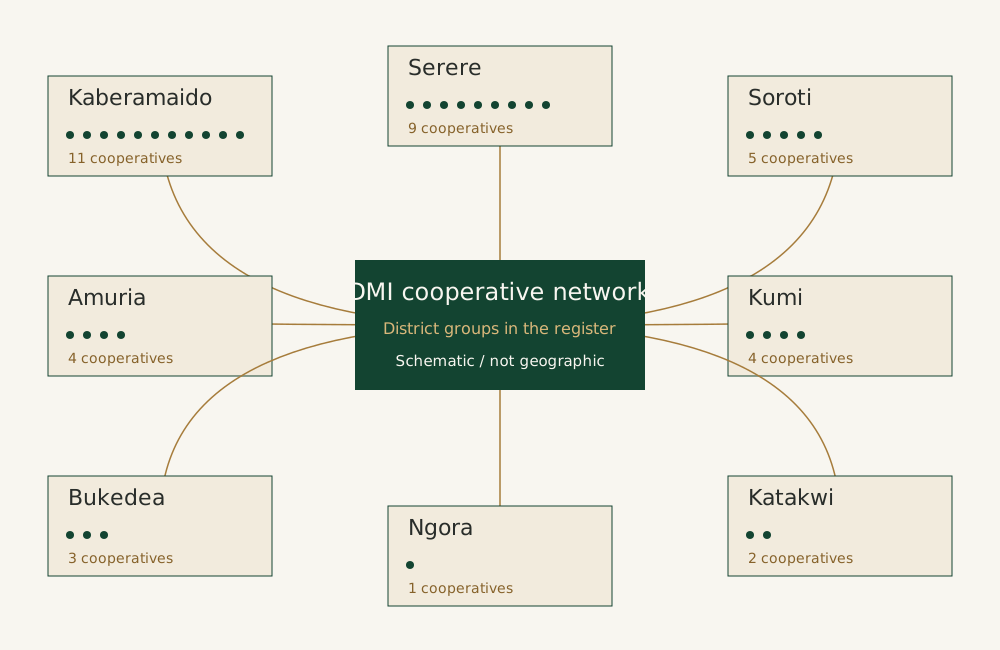
District groups from DMI’s cooperative register. This is a schematic network map: positions do not identify cooperative locations or current delivery routes.
Cooperatives by district in the DMI register.65 Each dot represents a cooperative within a district group, without mapping its location.
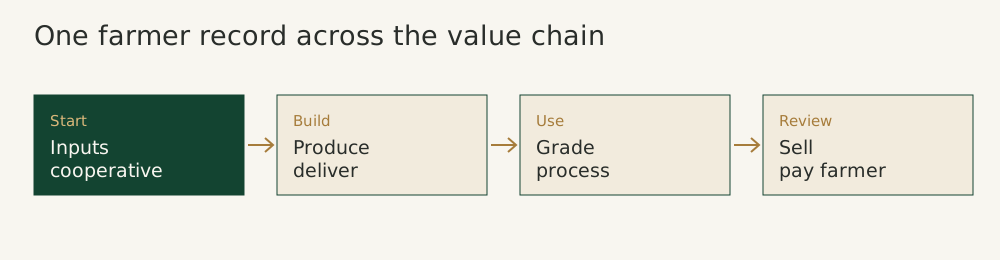
One farmer record across the value chain. Proposed sequence; each stage requires its own checks.76Sorghum and soya beans drying in the sun at Rhino Camp, West Nile, Uganda. Illustrative photo. Photo: Wani Isaac, CC BY-SA 4.0, via Wikimedia Commons. Resized for the web.
How it earns
These are proposed arrangements. Contracts, pricing, operating costs and any regulatory permissions would be confirmed for each activity.
Product sales
Planned sales of oil, meal, feed, flour, seed and coffee products as the relevant facilities become operational.
Inputs and services
Input-credit margin and fees for agricultural services, under confirmed terms and legal arrangements.
Processing and market access
Agreed processing or supply arrangements that match available crop volumes and quality.
Working capital for crop purchases is separate from the cost of building a plant. Supply, payment timing and offtake need to be planned together.76
How it connects
Agriculture supplies the raw material for Industrialisation and the initial demand for Energy. Farmer, plot and delivery records support Data; repayment histories could support licensed finance partners. IT would run the systems, Consultancy prepares each investment and CSR connects additional community work to local needs.
We welcome discussions around a defined project, capability or delivery need. The structures below are starting points for discussion, not an offer of securities or a promise of returns.
Offtake and supply agreements
You bringProduct specifications and a purchase commitment.
AVERON bringsCrop sourcing and a proposed processing and quality-control plan.