
The evidence behind our model.
Findings from our working paper, with every figure sourced.
Our working paper Feeding a Region of 600 Million (October 2026) sets out the evidence behind AVERON's model. These are its main findings.
Population and food demand
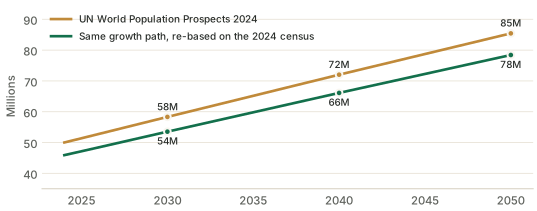
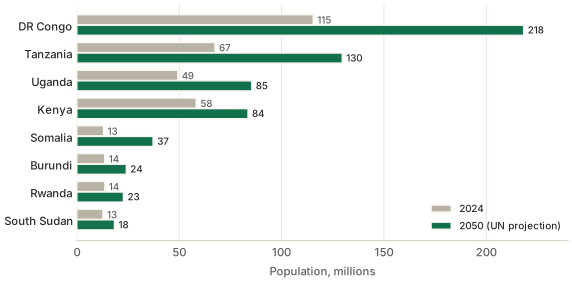
Uganda counted 45.9 million people in 2024, up 11.3 million in a decade1. Half are children and 23.5% are aged 18–302. The UN's projections start above the census, so we re-base them on the census count: on that basis Uganda reaches about 54 million by 2030 and 78 million by 20504,1. The eight East African Community states, with about 343 million people today, are projected at about 619 million by 20505,4.
Edible oil is the largest import gap
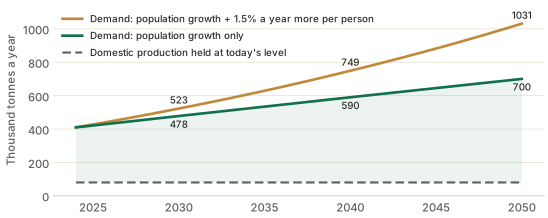
Uganda consumes about 410,000 tonnes of vegetable oil a year and produces about 80,00015. Imports, mostly crude palm oil, cost about USD 370 million a year, and less than 20% of the raw material used by the country's 104 oil factories is grown locally14. If consumption per person stays flat, demand reaches about 590,000 tonnes by 2040; if it rises 1.5% a year, about 750,000 tonnes. Both are AVERON estimates based on the census population path.
Crop yields, inputs and irrigation
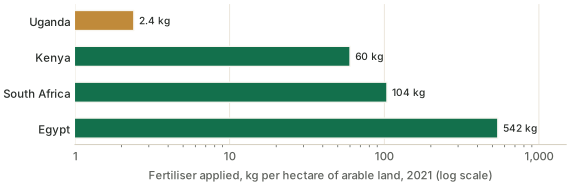
About 35% of Uganda's arable land is cultivated8, about 8.4 million of 24.2 million hectares, and irrigation covers about 1.5% of the potential22. Farmers apply 2.4 kg of fertiliser per hectare against 60 in Kenya and 104 in South Africa21. Maize yields rarely exceed 2.5 tonnes a hectare, a 71% yield gap20, and about 16% of the crop is lost after harvest19. These figures inform our plans for input credit, irrigation, drying and crop storage.
The market is large and growing
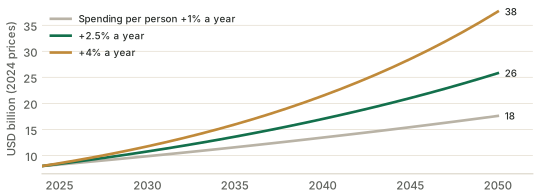
Uganda's grocery spending is about USD 7.6–8.3 billion a year, and less than 15% passes through formal supermarkets24. Agri-food imports reached USD 605 million in 2024, including more than USD 250 million of cereals24. Regionally, the DR Congo bought USD 542.7 million of Ugandan goods in FY2024/2525, and Kenya is short about 25 million bags of maize this season26. The African Continental Free Trade Area covers over 1.4 billion people, yet intra-African trade is only about 15% of the continent's exports31.
Investment in agricultural businesses
African agtech raised about USD 1.56 billion across more than 700 deals between 2014 and Q3 202435. In the latest year, climate-smart agriculture took 53% of funding and asset-heavy businesses 34%, and about 70% of deals above USD 1 million included a development-finance or impact investor35. Ag marketplaces and fintech led the 2024 deal count, with Kenya the leading market36. In Uganda, agriculture and agro-industrialisation make up about 35% of one commercial bank's loan book39.